Who changed this mark? Audit trails for a school office
Why a school's records should keep their history, what an audit trail should record for marks, attendance, receipts and stock, and how Campus One keeps one.
The question that arrives a week later
A parent says the mark on the report card is lower than the one the teacher read out in class. An accountant finds two receipts that seem to carry the same number. The store register says twelve projectors, and the yearly count finds eleven.
Each of these questions arrives days or weeks after the change that caused it, and each has the same first step: find out what happened, when, and who did it.
Why registers and spreadsheets lose the history
Paper keeps history in a rough way: a crossed-out mark is at least visible, even if nobody wrote down why. A spreadsheet passed around as a file usually keeps none: a corrected cell simply holds a new value, and the old one is gone. In both cases the reason for a change lives in someone's memory, and memory is exactly what is missing when the question arrives.
The principle: never overwrite, always add
A record you can trust is one where changes are added, not written over. A correction is a new entry with a name, a time and a reason. Totals, such as a balance, a stock figure or an attendance percentage, are worked out from the entries, so they can always be worked out again. And anything that has been handed to a family, such as a published report card, a receipt or a printed paper, stays exactly as it was handed over.
This is our guide to what that looks like in each corner of a school office, with the way Campus One does it. It follows on from our guide to role-based logins: an audit trail only works when each person signs in as themselves.
How Campus One keeps the history
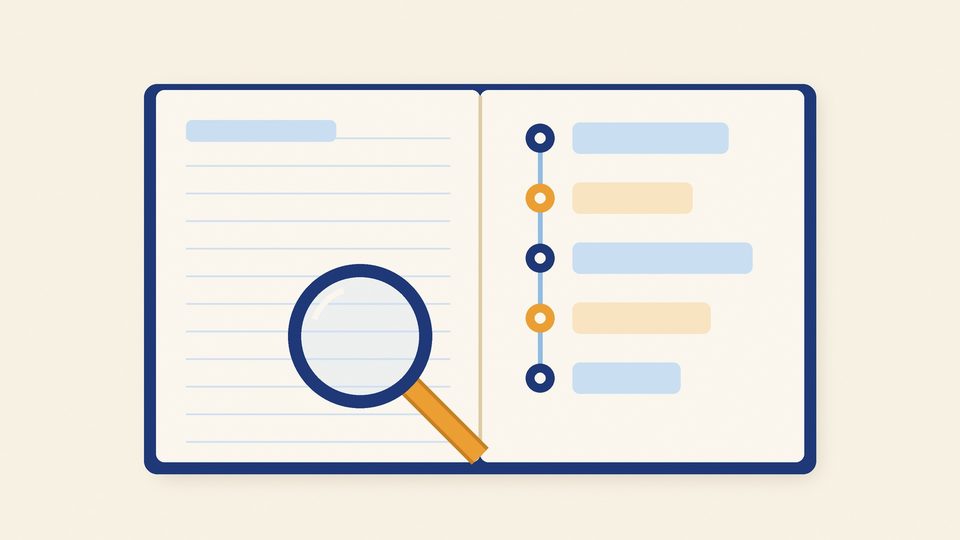
Every record has a timeline
Actions in Campus One write entries on the record's timeline, with who did it and when, and the timeline is designed to include actions taken by an automation or by AI. Timeline entries are added, never edited.
Attendance
Once a register is locked, a correction needs a reason, and the reason stays on record with the change. A register that was never taken is not hidden: it still counts as a working day, and the register shows it was not marked.
Marks and report cards
Each cell in the marks grid carries a version. If two people change the same cell, the second save is refused instead of silently overwriting the first. When results are published, each report card becomes a fixed copy; a later correction is issued as a new copy.
Receipts
Receipt numbers come from one sequence for each campus and financial year, with no gaps. Two cashiers recording payments at the same moment queue for the next number instead of colliding, and a payment that is rolled back before it is saved gives its number back, so no gap appears. The product's own tests prove the rule under pressure: twelve payments posted at the same moment produce a continuous run of receipt numbers, with no holes and no duplicates.
Balances are worked out from the ledger rather than typed, and a payment is applied to the oldest amount due first, so any balance can be explained payment by payment.
Stock and assets
Current stock is the sum of recorded movements: received, issued, returned, transferred, adjusted, damaged or lost. The movement ledger only grows, and the database itself refuses to let the application edit or delete its rows. There is no field anywhere where someone can type the stock figure. Fixed assets keep their assignments, moves, condition and maintenance, so a missing projector has a last recorded movement.
Question papers
Locking a paper records a fingerprint of its content, so any later edit can be detected. The paper keeps its own copy of every question, so editing the question bank later never changes a paper that was printed, and each edit to a question is saved as a new version. Every print is recorded, and the printed copy carries a confidentiality line with the viewer's name and the time.
Admissions
Each change of stage is written to the enquiry's history. When a new enquiry's phone number matches an existing family, the match is shown as evidence; the family record is joined only when a person admits the child, and that step is recorded too.
A rule above the features
Two lines in Campus One's engineering rules sum up the approach: records are archived rather than deleted, and a closed academic year is never changed.
What an audit trail does not do
An audit trail does not decide who was right. It gives the principal the facts in order, so the conversation with a parent, an accountant or an auditor starts from the record rather than from memory. It is also not a certification. This describes how the product is built, not a compliance claim or legal advice.
The outcome: questions answered from the record
Go back to the three questions at the start. The disputed mark has a history in the grid and a fixed published copy. Two receipts cannot carry the same number. The missing projector has a last recorded movement and the name of the person who recorded it. None of the answers depends on anyone's memory.
The takeaway
Before you buy any school software, ask the vendor to show the history of one record: a mark corrected after publishing, a cancelled payment, a stock adjustment. If they cannot, the history is probably not there. Our article on where school data should be stored covers the other questions to ask, and the Campus One fees page shows the receipt and ledger rules in the product. To see a record's history on the demo school, ask us for a walkthrough.
Key takeaways
- Never overwrite a record: add a correction with a name, a time and a reason, and work totals out from the entries.
- Published results, receipts and locked papers should be fixed copies; a correction is a new copy.
- Ask any vendor to show the history of one record before you buy.
Questions
Can a receipt number be skipped or used twice in Campus One?
No. Receipt numbers come from one sequence per campus and financial year with no gaps. The product's tests post twelve payments at the same moment and check that the receipt numbers form a continuous run with no holes and no duplicates.
What happens when a published report card needs a correction?
The published copy stays as it was, and the corrected report card is issued as a new copy, so there is never a question about which version a family received.